Skip to content
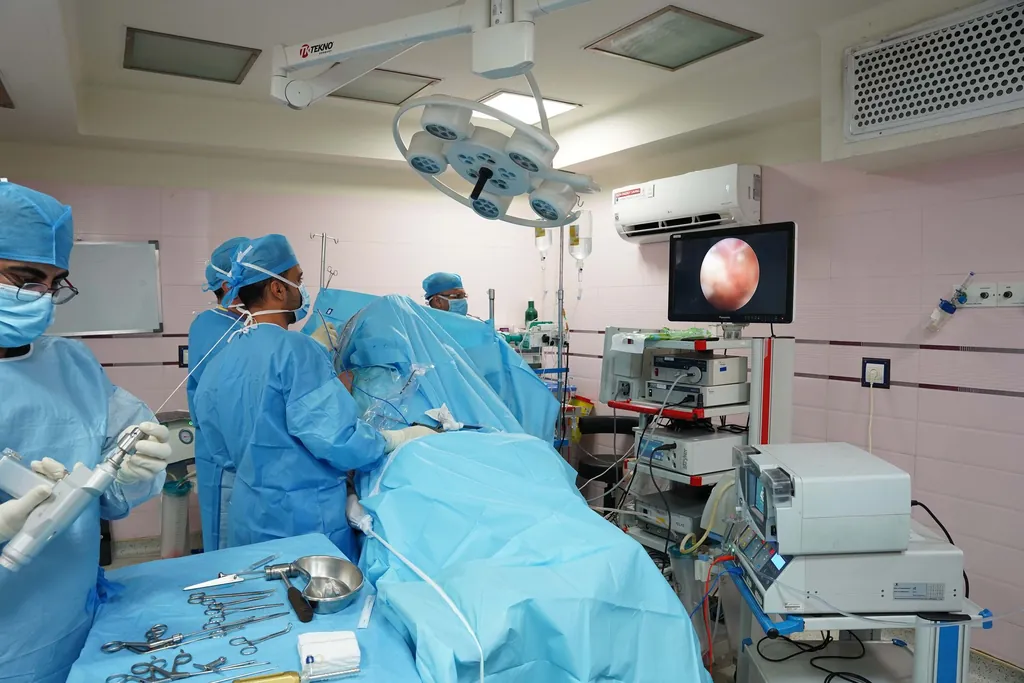
Clinical team performing an endoscopic procedure with the image on a monitor

Specialty billing Gastroenterology

Gastroenterology Billing Services for Practices and ASCs

Screening colonoscopies that turn diagnostic are where GI claims most often go wrong: the PT and 33 modifiers, the patient's cost-sharing and the code choice all change in the same procedure. If your practice bills a high volume of screening colonoscopies, EGDs and IBD infusions, small modifier errors add up. Our GI billing work is built to catch them before claims go out.

  • HIPAA compliant
  • AAPC/CPC Certified Coders and Billers
  • Works inside your existing EHR/PM system (Epic, athenahealth, eClinicalWorks, NextGen, Tebra, AdvancedMD)
  • You keep ownership of your data

GI billing focus

  • Screening → Diagnostic PT/33 checks
  • PT/33 Modifier logic
  • ASC Dual-side billing

The Core Problem

The Denial Rate No GI Practice Should Accept

Modifier errors on screening-turned-diagnostic colonoscopies are a common, preventable cause of GI denials. A patient comes in for a routine screening colonoscopy, the physician finds and removes a polyp, and the claim now has to show both the screening intent and the therapeutic service. Bill it wrong and the claim can deny or the patient can be charged the wrong cost-share.

This isn't a training issue for your physicians. It's a coding and modifier logic issue, and it belongs with AAPC/CPC Certified Coders and Billers who check colonoscopy modifiers before claims reach a payer.

Two physicians talking beside a patient in a hospital bed

The Costliest Coding Decision

Modifier PT vs Modifier 33: The Costliest Coding Decision in GI

Modifier PT and modifier 33 are not interchangeable, and using the wrong one on a converted colonoscopy claim can lead to a denial or the wrong patient cost-sharing.

Modifier PT and modifier 33 compared
ModifierWhen it appliesPayer type
PTScreening colonoscopy converts to diagnostic/therapeutic (e.g., polypectomy found)Medicare
33Preventive service with a USPSTF A or B rating; commercial plans use it to flag the screening intent. Medicare also uses 33 on moderate sedation (G0500/99153) that supports a screening colonoscopyCommercial payers (check each plan's policy); Medicare for sedation

The two modifiers exist because Medicare and commercial payers built different rules around the same clinical event. Applying commercial-payer logic (modifier 33) to a Medicare claim, or the reverse, can also put the wrong cost-share on the patient. For Medicare, when a screening colonoscopy turns therapeutic and PT is on the claim, the deductible is waived and coinsurance is 15% in 2026. Commercial plans follow federal preventive-services rules and their own policies. Getting this right the first time protects both your reimbursement and your patient relationships.

2026 update

For Medicare dates of service in 2026, a screening colonoscopy that becomes therapeutic (billed with modifier PT) still has the deductible waived, and patient coinsurance is 15%. It drops to 10% for 2027–2029 and to zero from January 1, 2030.

Source: CMS Medicare Claims Processing Manual, ch. 18, §60.1 and MLN MM12656.

Correct Billing Workflow

Screening Colonoscopy Converted to Diagnostic: The Correct Way to Bill

Here's how a real conversion scenario runs through our coding workflow:

  1. 1

    Patient presents for screening colonoscopy

  2. 2

    Physician performs snare polypectomy during the exam

  3. 3

    Modifier PT on the diagnostic or therapeutic code (for example 45385) signals "started as screening, became diagnostic or therapeutic". Medicare then waives the deductible and applies reduced coinsurance (15% for 2023–2026, 10% for 2027–2029, none from 2030)

  4. 4

    For a commercial patient under a preventive mandate, the equivalent claim is coded with modifier 33 instead

Skip this step, or apply the wrong modifier, and the claim can deny, or pay incorrectly and put unexpected cost on the patient, generating a billing complaint back to your front desk.

IBD Biologics

IBD Biologic Infusion Billing & Prior Authorization

MedixCode helps IBD practices manage the billing complexities of high-cost biologic infusions for Crohn's disease and ulcerative colitis. Our experts support:

  • Prior authorization tracking for biologics
  • J-code/HCPCS, dose, and unit validation
  • Applicable JW/JZ wastage reporting
  • Infusion administration coding based on documented times
  • Authorization-to-claim reconciliation
  • Denial and underpayment follow-up

We align documentation, drug administration, coding, and payer requirements to help reduce avoidable payment issues.

Clinician with a clipboard beside a patient receiving an IV infusion

End-to-End Workflow

Our GI Billing Process

Claims move through the same six-step workflow before they reach a payer:

See How We Handle Your GI Coding

Ask about our IBD infusion billing workflow and how we manage modifiers PT and 33 on colonoscopy claims.

Book a Free Consultation
  1. 01

    Charge Capture

    From your EHR/practice management system.

  2. 02

    GI-Specific Coding Review

    By coders experienced in gastroenterology procedures.

  3. 03

    NCCI + Modifier Scrubbing

    Colonoscopy, EGD and combination procedures checked against current NCCI edit pairs.

  4. 04

    Prior Authorization Management

    For biologics, imaging, and payer-required procedures.

  5. 05

    Submission with GI-Specific Clean-Claim Checks

  6. 06

    Denial Workflow

    Denials are worked by root cause, not written off.

Trust & Compliance

HIPAA-Compliant GI and ASC Billing

MedixCode is HIPAA compliant, and our staff are HIPAA-trained. For practices with an attached ASC, we handle both the professional (physician) and facility (ASC) billing sides under the same coding review.

Physician working on a laptop at his desk

Clear Pricing

How Pricing Works for GI Billing

Your fee is a share of net collections. Setup fees and monthly minimums don't apply, and we put the rate in writing once we know your physician and ASC volume. See how pricing works

  • Full GI-specific coding review (not just claim submission)
  • NCCI and modifier scrubbing before submission
  • Prior authorization management for biologics and procedures
  • Denial management and appeals

Seamless Onboarding

Transition to MedixCode with a Planned Handoff

Timing is a fair question when switching billing partners mid-year. Here's how the handoff runs:

  1. 1

    Parallel run. We start alongside your current process before we take it over.

  2. 2

    Patient-balance continuity. Existing patient balances and payment plans carry over to your statements and collections.

  3. 3

    ASC + Physician-Side Handoff. Both billing sides transition on a coordinated timeline, not separately.

  4. 4

    First-claim review. We audit your first claims against current payer rules before they go out, so errors are caught before they become a pattern.

FAQ

Frequently Asked Questions

Answers on PT and 33, conversions, same-day EGD and colonoscopy, biologics and onboarding. More questions? See our FAQ

Q01 When do I use modifier PT versus modifier 33 on a colonoscopy claim?

For Medicare, add modifier PT to the diagnostic or therapeutic colonoscopy code when a screening colonoscopy turns diagnostic or therapeutic. Commercial plans often use modifier 33 to show the service started as preventive screening, but policies vary by plan. Medicare also uses modifier 33 on moderate sedation that supports a screening colonoscopy.

Q02 What happens if a screening colonoscopy converts to diagnostic during the procedure?

You bill the diagnostic or therapeutic code for what was done, for example a snare polypectomy, with the conversion modifier the payer requires. For Medicare in 2026, the deductible is waived and the patient's coinsurance is 15%.

Q03 Can I bill an EGD and a colonoscopy on the same day?

Yes. An EGD and a colonoscopy are different endoscopy families, so each is reported with its own code. Medicare pays the higher-valued procedure in full and reduces the other under its multiple-procedure rules. Modifier 59 or an X modifier is only needed when a specific NCCI edit applies and the documentation supports it.

Q04 How do you manage prior authorization for IBD biologic infusions?

We submit and track PA requests for infliximab, vedolizumab and similar biologics, including documenting any required step-therapy failures, before the infusion is scheduled.

Q05 Do you publish a clean claim rate for GI practices?

No. It varies by payer mix and practice, so a blanket number wouldn't mean much. GI modifier scrubbing and NCCI checks before submission are core to how we work, and in the consultation we can go through your own colonoscopy and EGD claims with you.

Q06 Do you handle ASC (ambulatory surgical center) billing?

Yes. We bill both the professional (physician) side and the facility (ASC) side for GI practices with an attached ASC, under the same coding review.

Q07 Do you code for us or only submit what our providers document?

We do full GI coding review. Our AAPC/CPC Certified Coders and Billers review documentation, apply CPT codes and modifiers, and run NCCI and bundling checks before anything goes to a payer.

Q08 How does onboarding work for a GI practice?

Your start date is set once we've reviewed your EHR/PM access, your payers and how your professional and facility claims are billed today. From there we plan the handoff with you, aiming to keep collections steady while you switch.

GI Billing · No Obligation

Start a GI Billing Transition Consultation

Talk to a GI billing specialist about your modifier logic, NCCI scrubbing, IBD infusion billing, and ASC billing needs. No commitment required.

Prefer email? Ask about your GI claims at info@medixcode.com.

Physician on a video consultation at his desk